


Cleo Kinnaman: The Swedish-Ethiopian Artist Who Made Black & Grey a Global Language
Some artists make tattoos. Cleo Kinnaman makes portraits that happen to live on skin. The distinction matters. Where most tattoo artists are drawing on a body, Cleo is painting a psychological study — her subjects rendered in soft, layered black and grey with the kind of emotional weight you'd expect from a fine art gallery, not a tattoo chair.
She has 118,000 people searching her name every month. Most of them don't know she has a collab with Sullen. That's about to change.
Born between continents
Cleo Wattenström Kinnaman was born in Belgium in 1992 to a Swedish mother and Ethiopian father. The family settled in Stockholm, but Cleo spent her childhood moving — Europe, Africa, wherever the world took them. That nomadic upbringing gave her something most tattooers don't have: a visual vocabulary built across cultures, not within one.
At 14, she dropped out of school to pursue tattooing. Not a rebellious gesture — a calculated one. She had been drawing her whole life and understood early that formal education wasn't the path. She found a mentor, served her apprenticeship in Stockholm, and built the foundation of a style that would eventually attract clients from every continent.
The style: black and grey realism meets surrealism
Cleo works almost exclusively in black and grey. Her portraits — often celebrities, cultural figures, people of personal significance — sit somewhere between photographic realism and a dream state. Sharp in the eyes. Soft in the shadows. The technique borrows from old black-and-white photography and classic film, the kind of imagery that exists at the boundary between memory and imagination.
What separates her from other black-and-grey portraitists is the mixed-media influence. Cleo has spent years as a painter in parallel with tattooing, and that sensibility bleeds into her needle work. Her tattoos have brushwork quality — the transitions in value are unusually subtle for skin, the compositions more considered than typical portrait tattoos.
Her subjects have included Marilyn Monroe, Salvador Dali, Al Capone, Kurt Cobain. Figures who carry cultural weight, whose faces have become symbols. Tattooed, they don't just decorate skin — they make a statement about the person wearing them.
From Stockholm to Venice Beach
Cleo's path to Los Angeles was a natural one. SoCal has been the center of black-and-grey tattooing since the style developed in the California prison system in the 1970s and evolved into the Chicano art tradition that defines the culture today. Venice, where she runs her private studio Shanti Tattoo, is ground zero for that lineage — steps from the beach, embedded in the same SoCal world that Sullen has been documenting in apparel for 24 years.
The cultural overlap is real. Cleo's black-and-grey work is directly in conversation with the Chicano tattoo tradition — the emphasis on fine lines, smooth gradients, portrait-as-tribute. The style Sullen was built to celebrate.
The Sullen collab
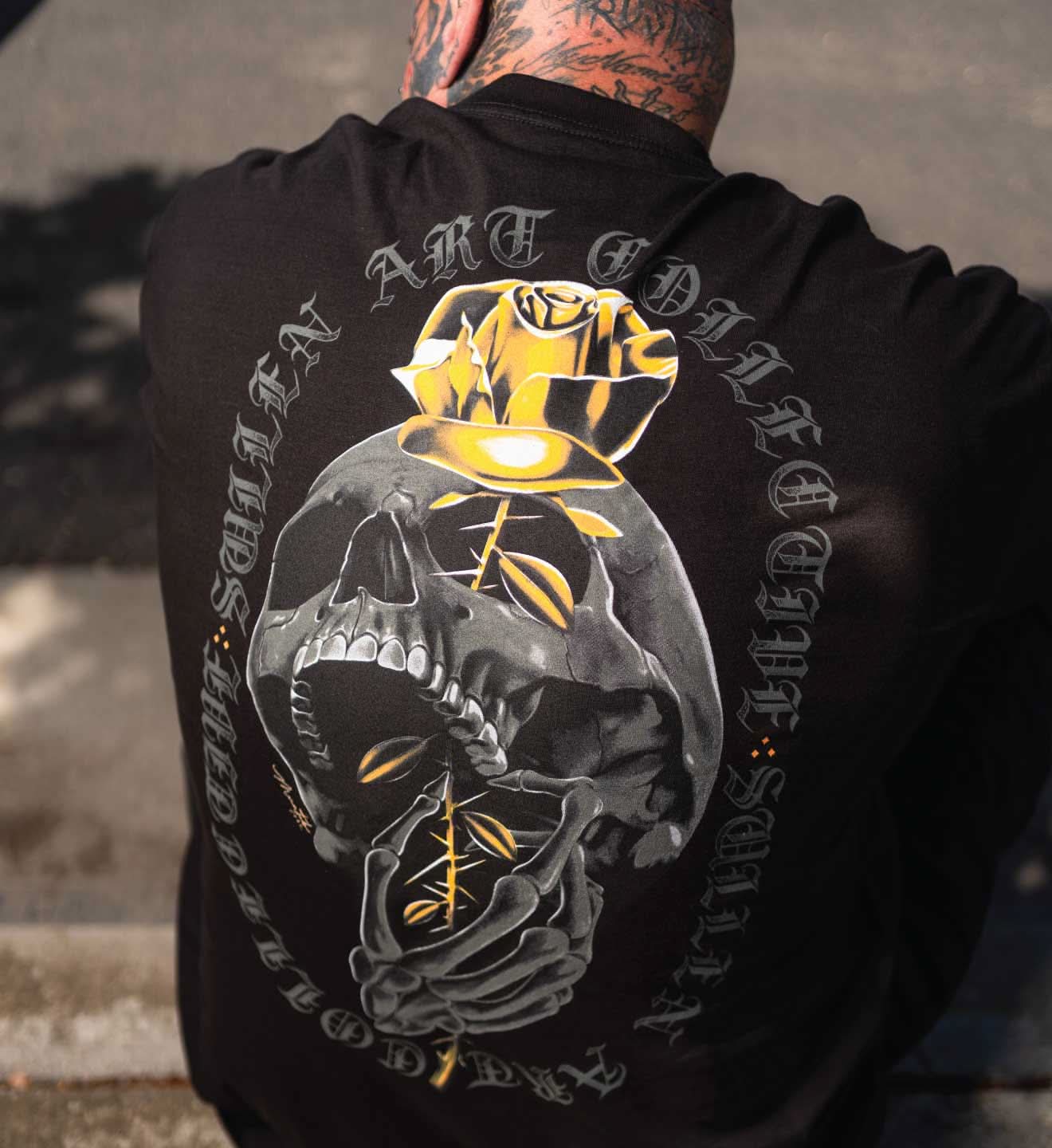
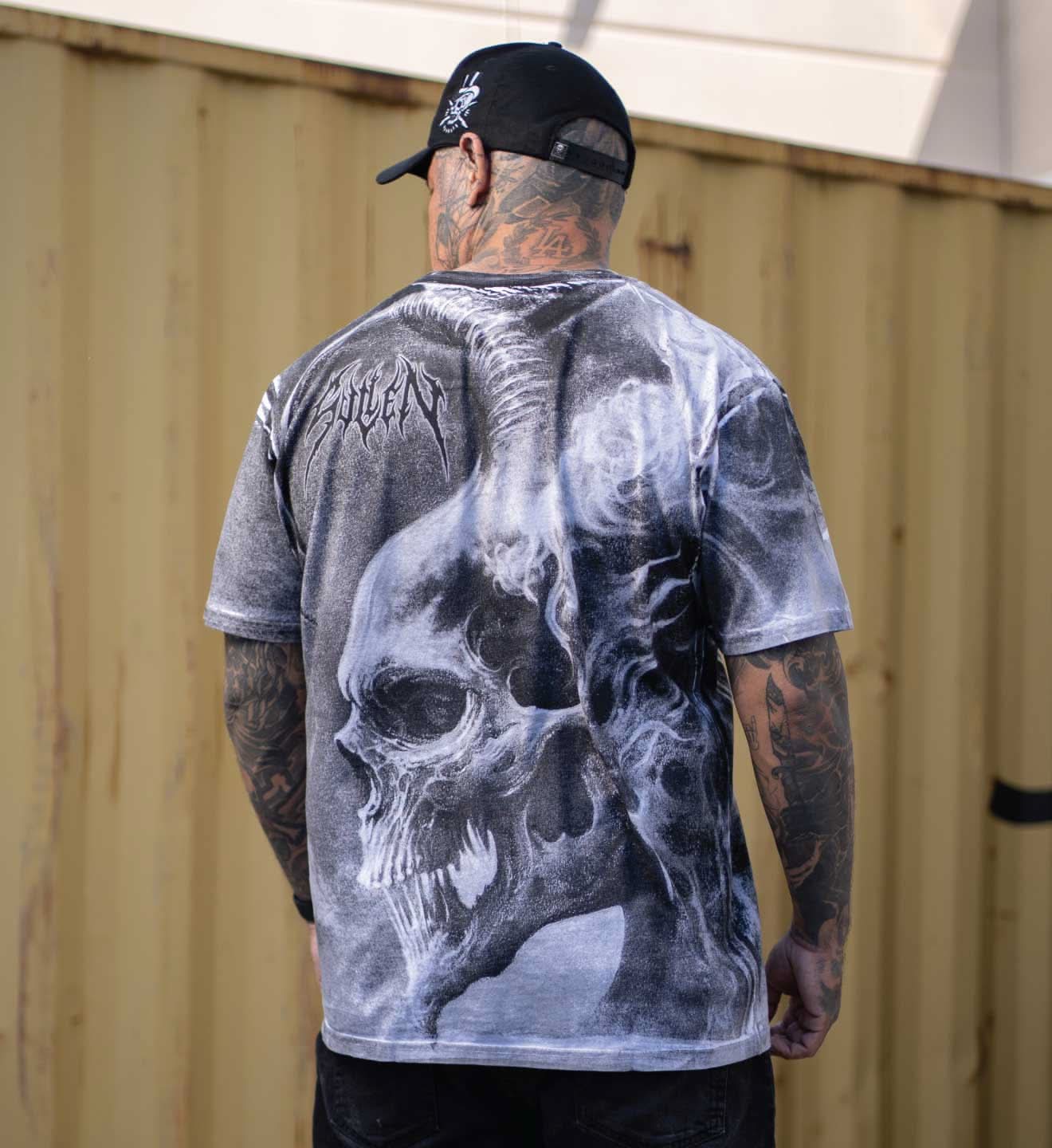
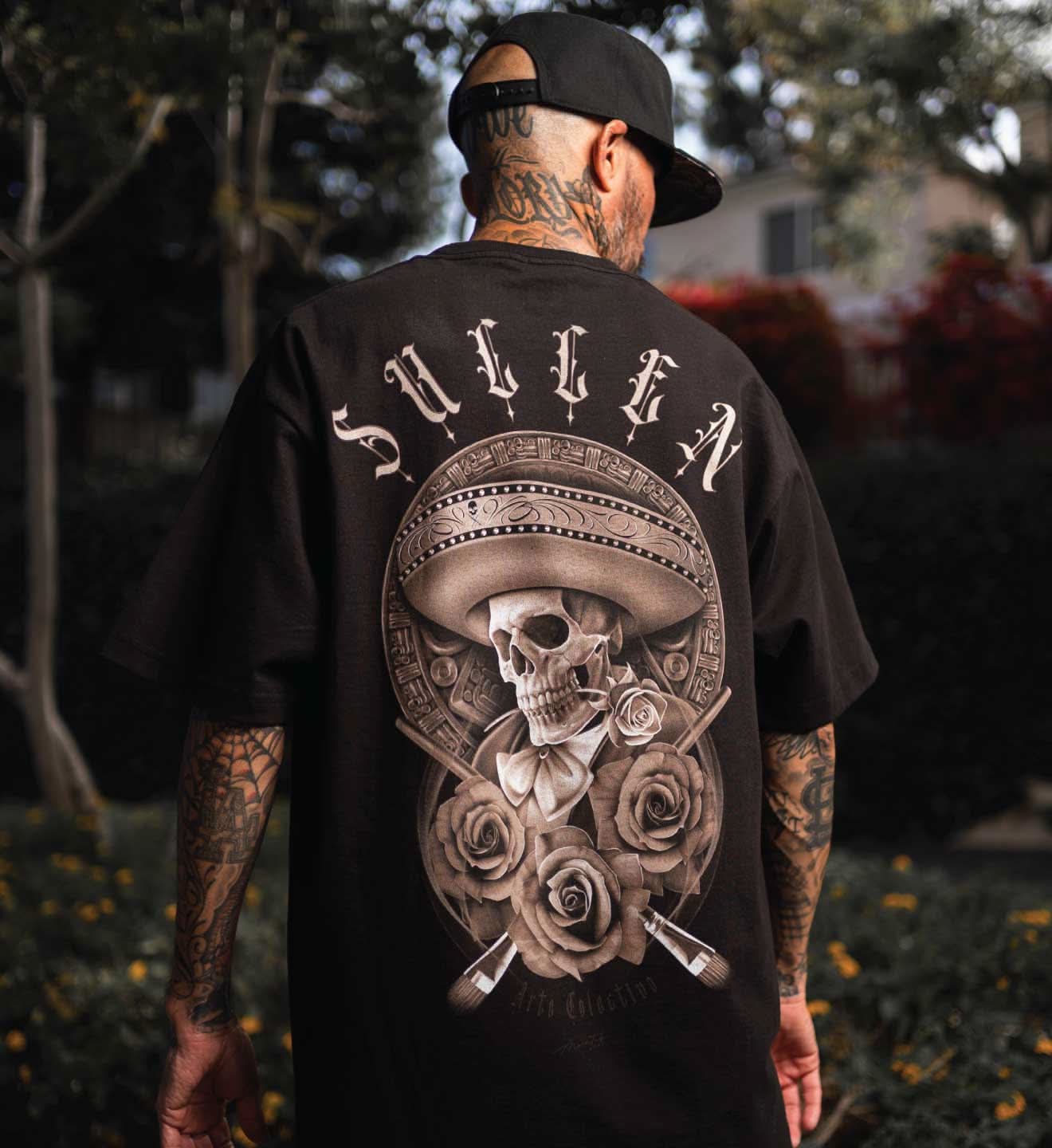
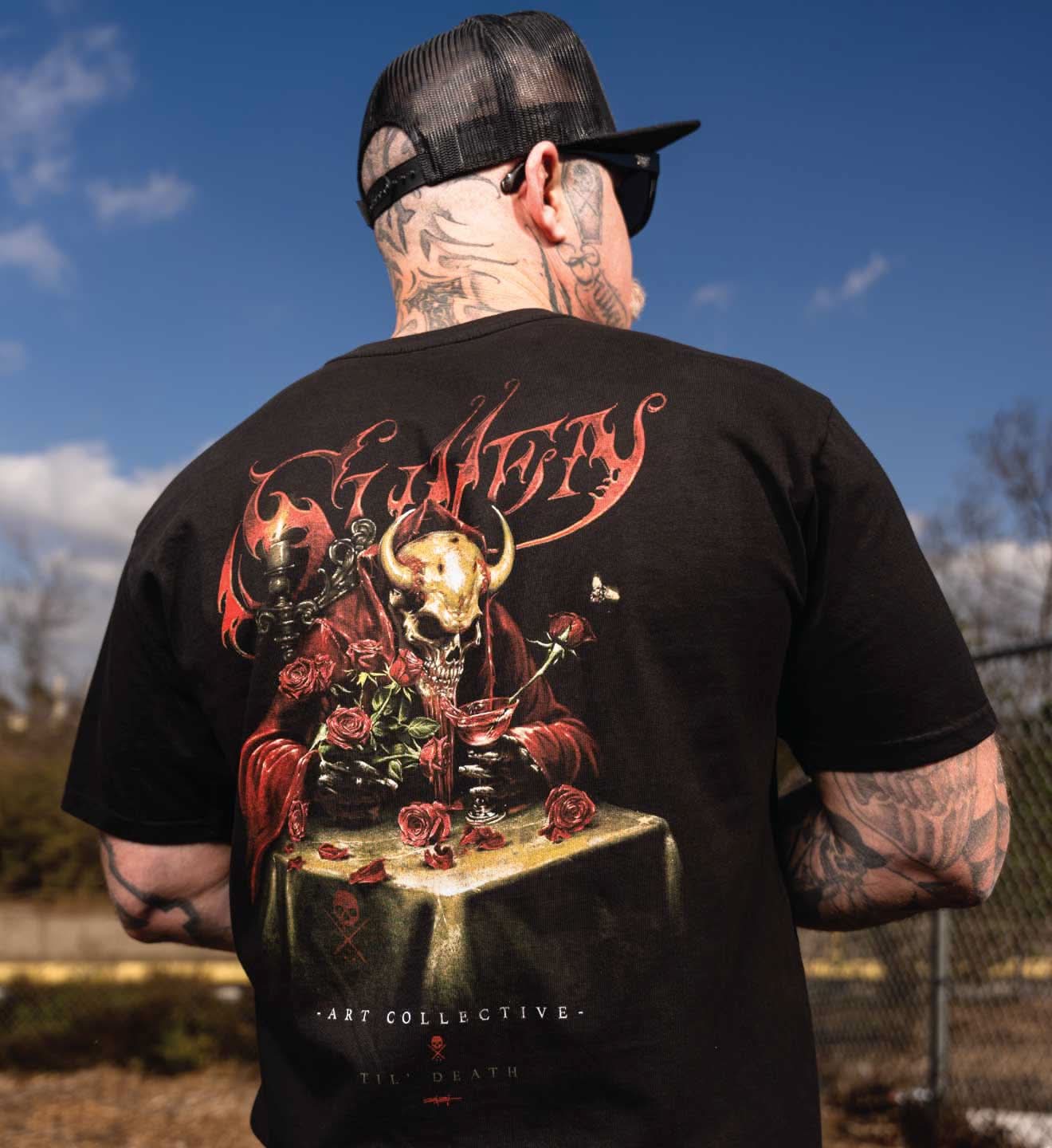
Cleo partnered with Sullen Art Collective to translate her artwork into wearable form — a natural extension of what she does. Her tattoo designs, rendered as graphics on Sullen's premium cotton, carry the same emotional weight as the originals. The softness of her black-and-grey work translates to print in a way that bold, saturated art doesn't always manage.
For collectors and tattoo enthusiasts who follow her work, the collab pieces are the closest most people will get to wearing a Cleo Kinnaman original.
Beyond the needle: painting with DNA
After 14 years of professional tattooing, Cleo shifted her primary focus toward painting — but not conventional painting. Her portrait work incorporates DNA samples of her subjects into the paint itself, obtained through swabbing, tape lifting, or direct samples. The resulting pieces are literally made of the people they depict. It's a concept that sits at the intersection of fine art, science, and the same impulse that drives memorial tattooing: the desire to preserve something of a person, permanently.
She has exhibited this work internationally and sold pieces at charity auction — including a record-setting sale at a gala that was the highest price ever achieved at that event in 14 years. She's a WaterAid Ambassador for The Operakällaren Foundation in Sweden, raising funds for clean water access in East Africa — a cause tied directly to her Ethiopian roots.
What she represents
Cleo Kinnaman is what happens when tattooing is treated as a fine art discipline from day one. No compromise toward the decorative. No shortcuts in technique. A practice built on the same principles that govern painting, drawing, and portraiture — applied to skin because that's the most intimate canvas available.
She's also one of the most visible female tattooers in the world — not because she positioned herself that way, but because the work demanded attention. In a culture that has historically been male-dominated, her presence at the top of the field is both deserved and overdue.
If you don't have a Cleo Kinnaman tattoo, you can wear one. Shop the Sullen Artist Series — and see the full artist roster at sullenclothing.com/blogs/artists/cleo-kinnaman.