

New school tattoo is one of the most visually aggressive styles in the game. Bold outlines pushed to their limit, colors that hit like a street mural, exaggerated proportions, cartoon logic applied to tattoo art. It borrows from graffiti, comic books, animation, and fine art simultaneously — and it does it without apology.
If you've seen a tattoo that looks like it was drawn by someone who grew up on 90s cartoons and spent their apprenticeship studying color theory, that's new school. Here's everything you need to know about the style, how it's different from old school, what to look for in an artist, and why it remains one of the most technically demanding forms of tattooing on earth.
What is a new school tattoo?
New school is a tattoo style that emerged in the 1980s and evolved through the 90s and 2000s as a reaction to — and expansion of — traditional American tattooing. Where traditional (old school) uses a specific, codified visual language — bold black outlines, a limited flat color palette, classic iconography — new school treats those rules as a starting point and then breaks them.
The defining characteristics of new school tattooing:
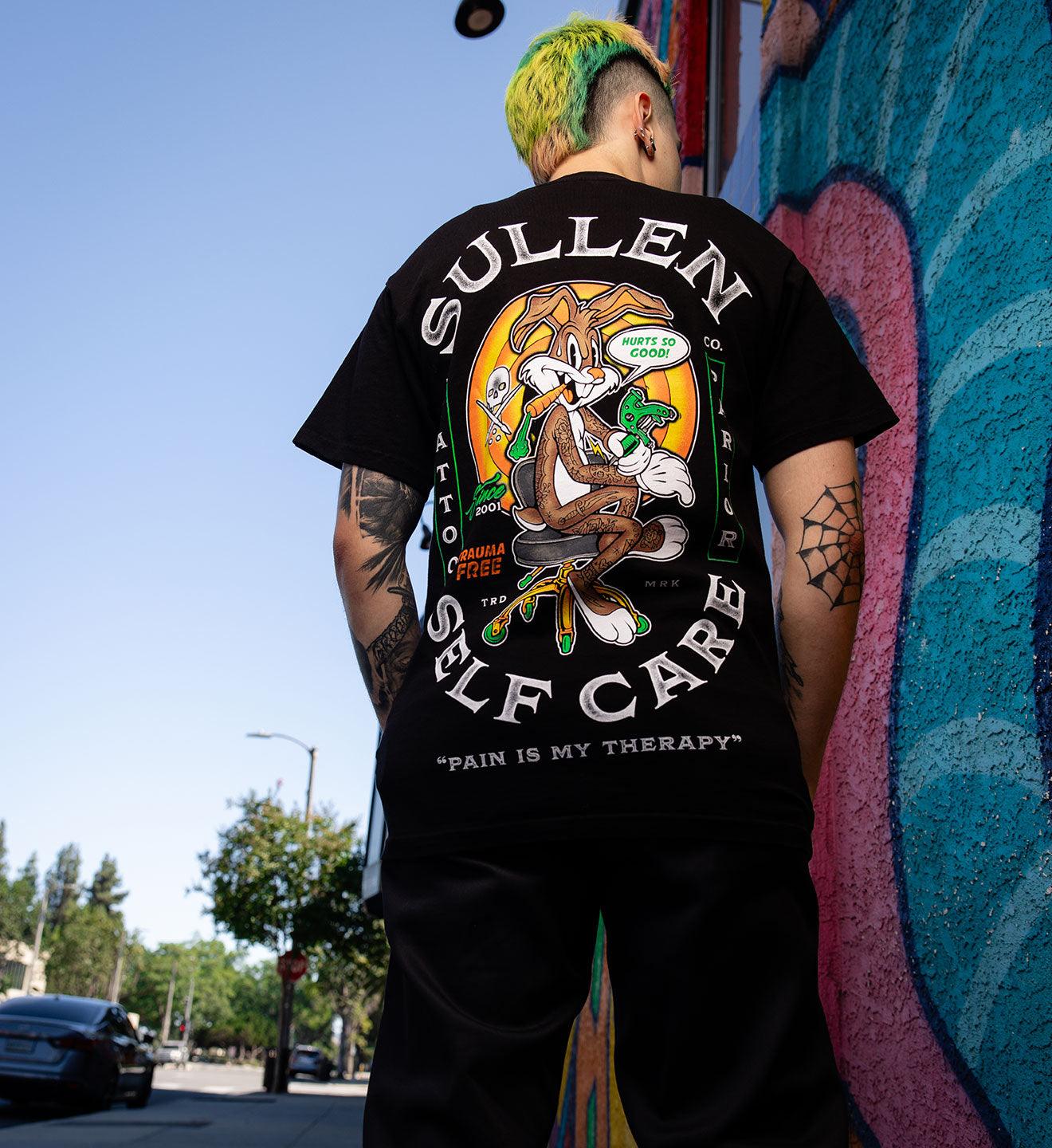
Exaggerated proportions — figures, animals, and objects are stretched, compressed, or distorted for visual impact. Heads are bigger, eyes are larger, limbs are longer or shorter than reality. The goal is maximum expressiveness, not anatomical accuracy.
Heavy outlines with variation — black outlines are present and bold, but they vary in weight dramatically within a single piece. The outline itself becomes a design element, not just a container.
Saturated, layered color — new school work uses a full spectrum of color, often with dramatic contrast and complex gradients. Color isn't just fill — it's used to create depth, light, and movement. Multiple colors can occupy a single area in a way that old school never attempted.
Illustrative detail — shading, textures, and detail work within the linework is common. New school bridges the gap between traditional tattooing and illustrative art.
Cartoon and pop culture influence — the aesthetic borrows heavily from comic books, street art, graffiti lettering, animation, and caricature. The visual vocabulary is contemporary rather than nautical or folkloric.
New school vs old school tattoo — what's the difference?
Old school (American Traditional) tattooing has a strict visual language: black outlines of consistent weight, a limited palette of red, yellow, green, blue, and black, and a specific catalog of images — eagles, panthers, roses, daggers, ships, swallows, pin-ups. The style was designed for longevity in skin. Simple fills hold. Bold lines don't bleed. The design reads clearly at distance and holds up over decades.
New school keeps the boldness but throws out the rulebook on everything else. The palette becomes unlimited. The subject matter becomes anything. The proportions go wherever the artist wants them to go. The tradeoff: new school work is significantly more technically demanding to execute well, and the long-term performance of the tattoo depends heavily on the skill level of the artist — complex color layering and fine detail can fade unevenly if not applied correctly.
Both styles share a commitment to clean linework and visual impact. They just express that commitment completely differently.
New school vs neo traditional
These two styles get confused regularly and they're related but distinct. Neo traditional is essentially old school architecture with expanded subject matter and a slightly richer color palette — it keeps the consistent outline weight, the structured composition, and the traditional feel, but opens up the imagery beyond the classic catalog. Think of it as American Traditional for the contemporary era.
New school breaks more radically from the traditional template. The proportions are more extreme, the color choices are more aggressive, the cartoon influence is more overt, and the overall effect is more chaotic and visually dense. Neo traditional is a refinement. New school is a departure.
What makes a great new school tattoo artist?
New school is unforgiving. The exaggerated proportions, complex color work, and heavy detail make technical weaknesses impossible to hide. What separates a great new school artist from someone who just works in the style:
Color mastery — not just mixing colors but understanding how they interact in skin over time. Saturated new school palettes require precise needle work and ink layering. Poor color application leads to muddy healed results.
Drawing fundamentals — the exaggerated proportions of new school only work when the artist understands correct anatomy first. You can't effectively distort what you don't understand.
Composition control — new school pieces can become visually chaotic if the artist doesn't have a strong sense of how the eye moves through the design. The best new school work is energetic but controlled.
Line confidence — varied line weight is one of the style's signatures, but it requires extreme confidence and control. Shaky or inconsistent lines collapse the design.
When looking at an artist's portfolio, check healed work specifically. Fresh new school tattoos always look punchy. It's the healed work that shows you whether the color holds and whether the linework stays crisp.
New school tattoo subjects and themes
New school is genuinely unrestricted in subject matter — the style's flexibility is part of the point. Common subjects and directions:
Animals rendered in exaggerated, character-driven style — wolves, tigers, owls, bears, and snakes are perennial favorites because the style's expressiveness works particularly well with animal subjects. Horror iconography — Freddy, Jason, Pennywise, and classic monsters translate naturally into new school's cartoon-influenced aesthetic. Food and pop culture objects — pizza slices, sneakers, cassette tapes, game controllers. Street art crossover — graffiti characters, bombing-style compositions. Portraits with extreme stylization — taking a real face and pushing it into caricature territory.
New school tattoos and Sullen
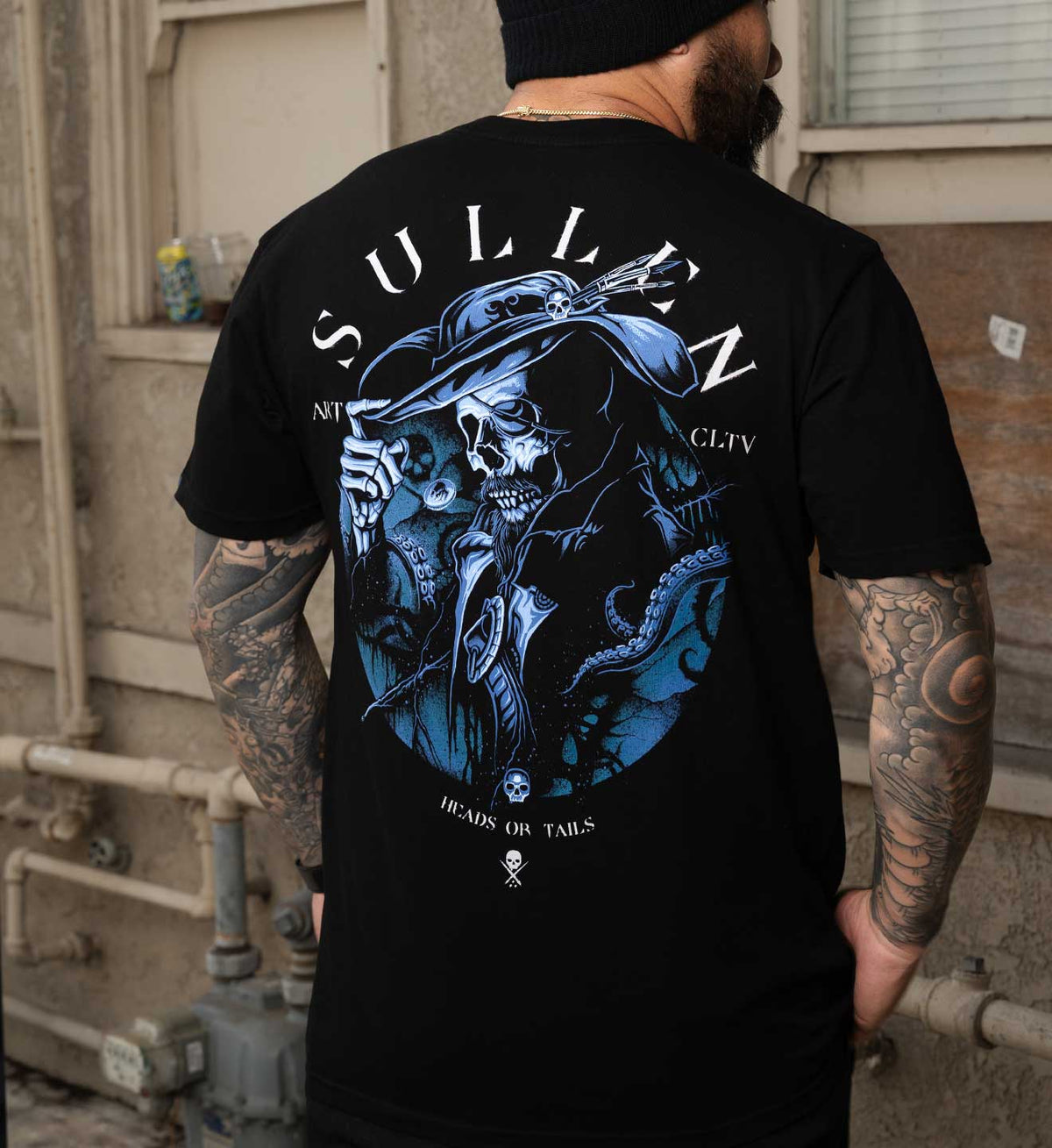
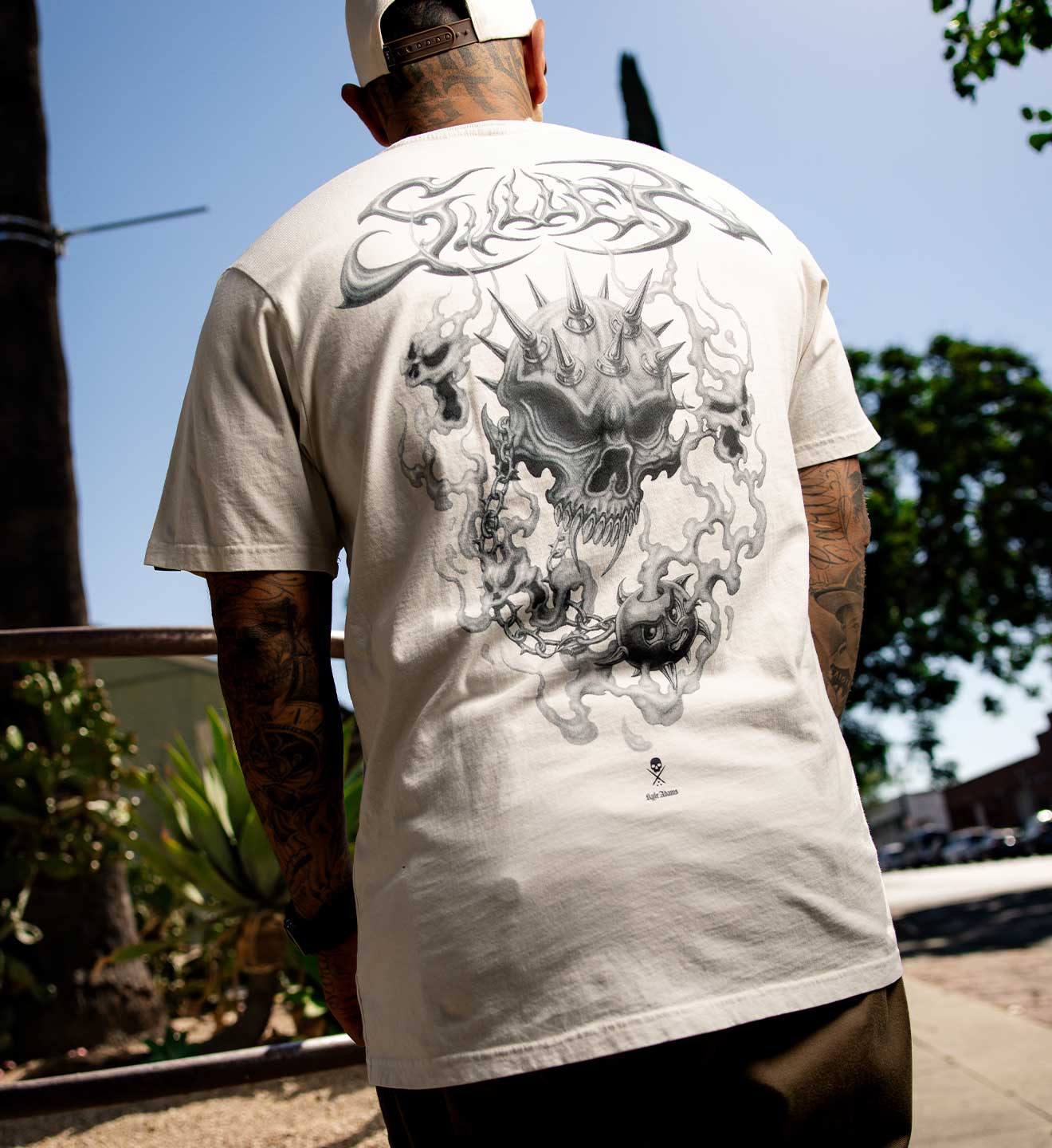
New school is in our DNA. The artists we work with at Sullen Art Collective have deep roots in the tradition — the bold color work, the graphic sensibility, the willingness to push proportions past comfort. The Sullen aesthetic lives in the intersection between tattoo culture, street art, and contemporary illustration. New school is one of the key languages in that conversation.
Explore the Sullen Artist Directory to find artists whose work speaks to the new school tradition, and shop the tattoo art collection for pieces that carry that same visual energy.
Sullen Art Collective has been rooted in tattoo culture for over 24 years. We make clothes for people who live the art.

Written by Ryan Smith