

Artículo: The Guide to Heavyweight Tees: Weight, Garment Dye, and Why It Matters for the Art
The Guide to Heavyweight Tees: Weight, Garment Dye, and Why It Matters for the Art
The Guide to Heavyweight Tees: Weight, Garment Dye, and Why It Matters for the Art
Sullen Tattoo Insights
A heavyweight tee is a t-shirt made from fabric weighing 6.5 oz per square yard or more — roughly 220+ GSM. Compare that to the 4.3–5.3 oz fast-fashion standard and the difference is obvious the second you pick one up. Heavier yarn, tighter knit, more structure, more years. If you've ever wondered why some tees drape like a curtain and hold a print for a decade while others go translucent and warped after a summer, this is the guide.
We make tees for people who carry art on their skin. The shirt has to live up to the same standard. Here's everything that goes into a heavyweight tee — fabric weight, garment dyeing, oversized fits, and why the blank you print on is an art decision, not just a sourcing one.
What makes a tee "heavyweight"?
Fabric weight, measured in ounces per square yard (oz) or grams per square meter (GSM). The working scale:
- Lightweight: 3.5–4.5 oz (120–150 GSM). Breathable, drapey, prone to showing everything underneath. Right for summer layers, wrong for structure.
- Midweight: 5.0–6.0 oz (170–200 GSM). The standard tee most brands ship. Fine. Forgettable.
- Heavyweight: 6.5 oz and up (220–280+ GSM). Dense, opaque, boxy out of the box. Holds its shape on the hanger and on your frame.
Weight alone isn't the whole story. Yarn quality matters — ring-spun and open-end cotton at the same weight feel completely different. Ring-spun yarn is twisted and thinned into a finer, smoother thread, so a heavyweight ring-spun tee lands heavy in hand and soft on skin instead of feeling like a canvas drop cloth. That combination — weight plus ring-spun cotton — is the difference between a tee that's just thick and one that's actually built.
What is a garment-dyed tee?
Garment dyeing means the shirt is sewn first, then dyed as a finished garment — the reverse of conventional production, where fabric is dyed on the roll and cut afterward. It costs more and takes longer. It's worth both.
What garment dyeing changes:
Color depth. Dye saturates the finished piece — seams, collar, stitching, everything takes the color together. The result is a lived-in, dimensional tone you can't get from piece-dyed fabric. No two dye lots land exactly the same, which is the point.
Pre-shrinkage. The garment goes through hot water and dye baths before it ever reaches you, so the shrinking already happened. The fit you buy is the fit you keep.
Hand feel. The dye process breaks in the cotton. A garment-dyed heavyweight tee skips the stiff phase and shows up already feeling like your favorite shirt at month six.
Character over time. Garment-dyed colors fade the way good denim fades — gradually, evenly, earning a patina instead of just looking washed out.
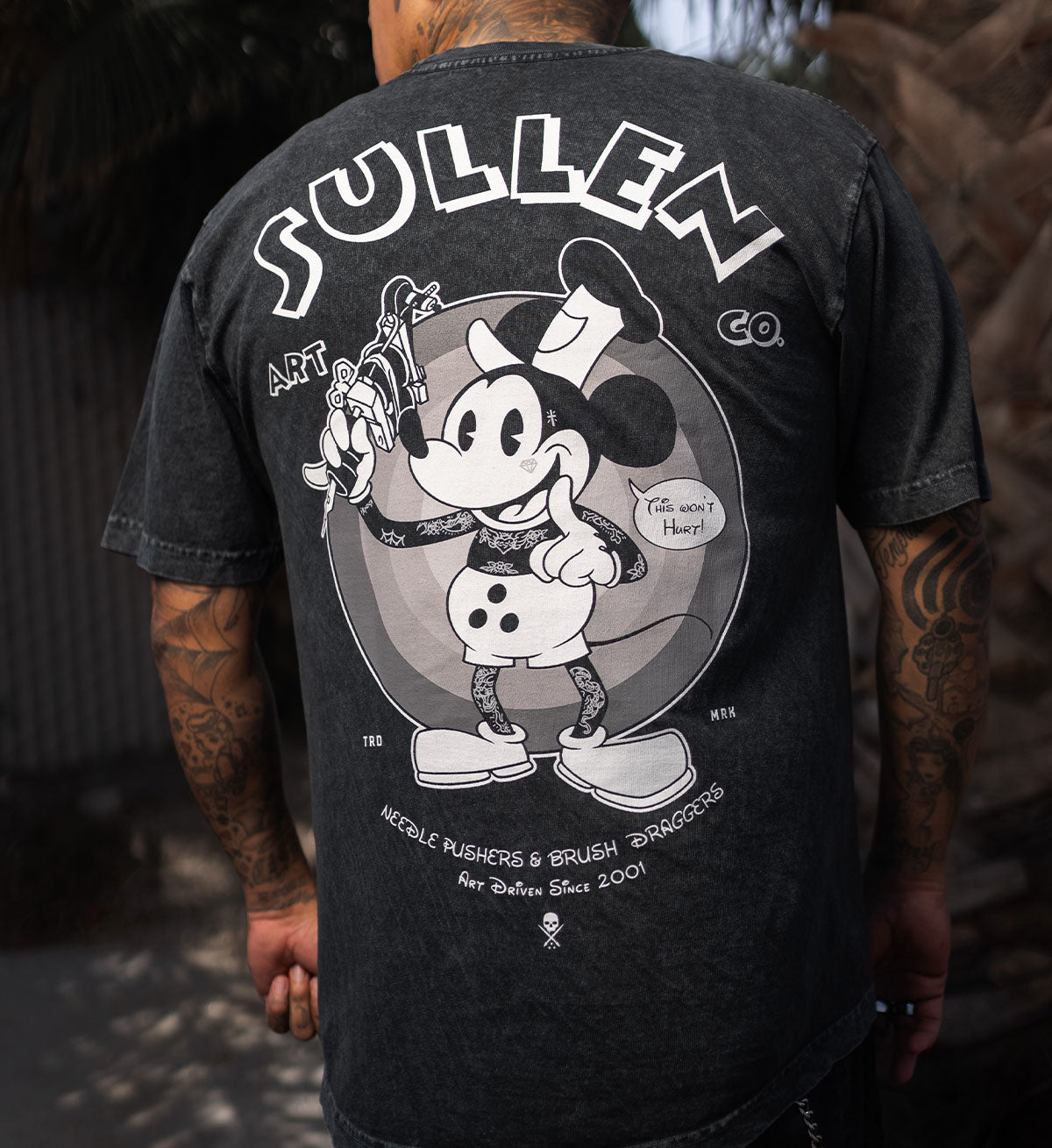
When we say a tee is dyed to the art, that's literal. The dye color is developed around the artwork going on it, not pulled from a stock swatch book. The garment and the graphic are one decision.

Why fabric weight is an art decision
Here's the part most apparel guides skip: the blank determines how the art survives.
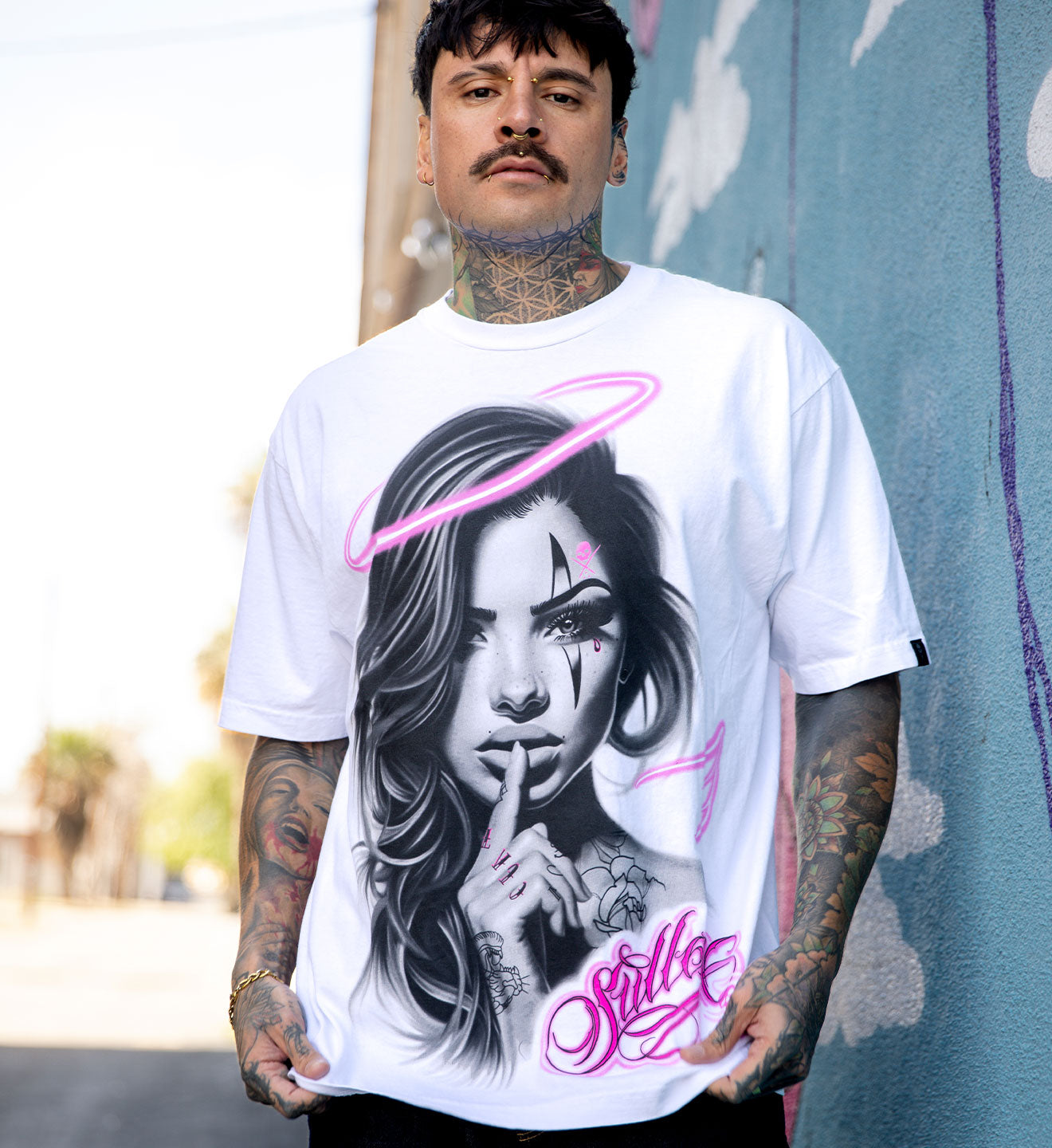
Tattoo art is detail work — fine linework, smooth gradients, single-needle texture, color realism. Translating that to a screen print demands a stable surface. On a thin, loose-knit tee, ink sits on a surface that stretches, warps, and thins out with every wash. Linework cracks. Gradients break apart. The print degrades faster than the shirt.
A heavyweight blank changes the physics:
- Tighter knit = higher print resolution. Denser fabric gives ink a flatter, more consistent surface. Fine lines stay fine.
- Dimensional stability = print longevity. Heavy fabric resists the stretch-and-recover cycle that destroys prints. The art looks right at wash fifty, not just wash one.
- Opacity = true color. No fabric show-through muddying the palette. Black hits black. Color realism reads the way the artist painted it.
If the graphic matters — and on our tees, the graphic is the entire reason the shirt exists — the blank is art-critical infrastructure. You don't hang a museum piece on a wall that's falling down.

What is an oversized fit, and how should it look?
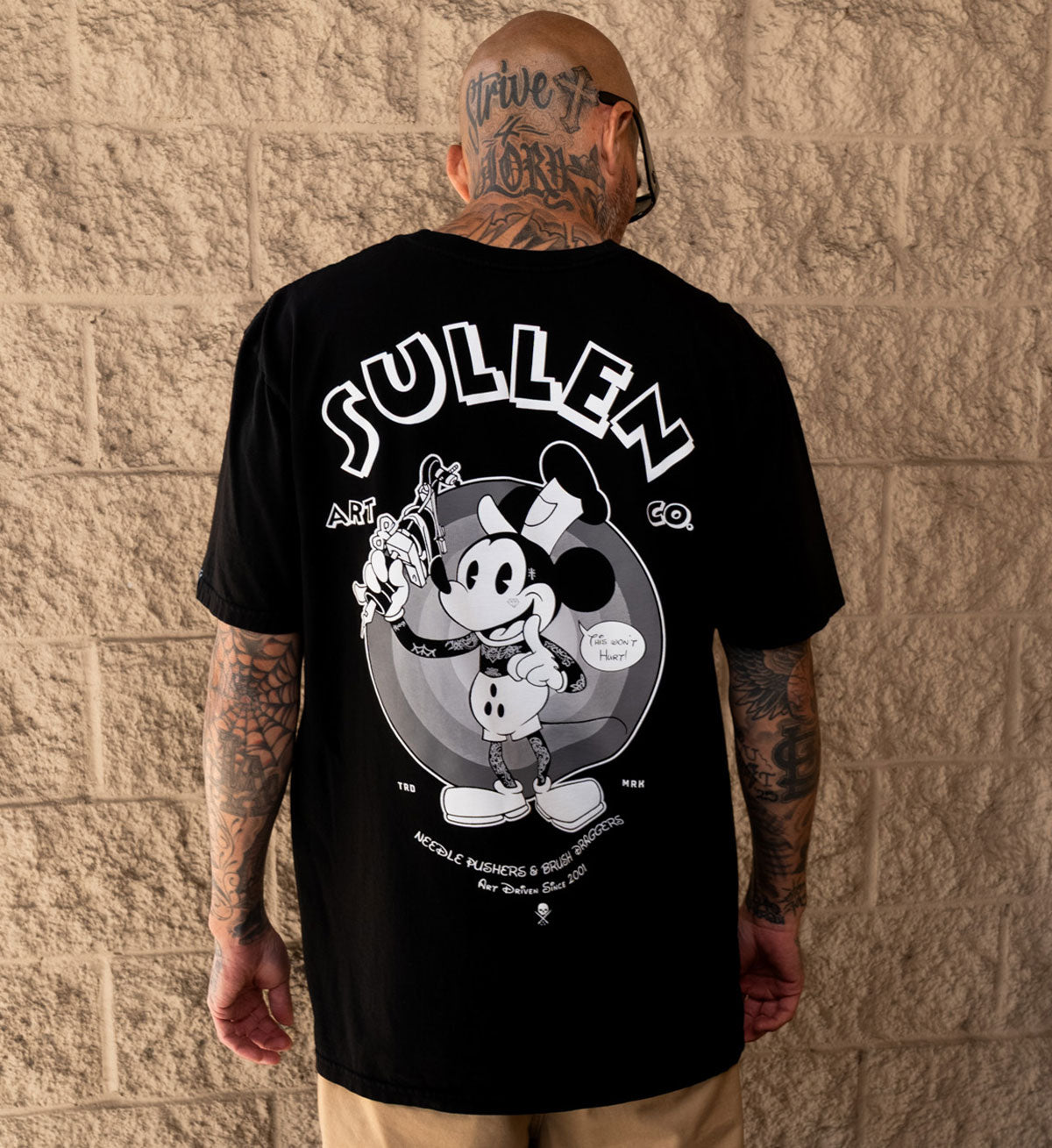
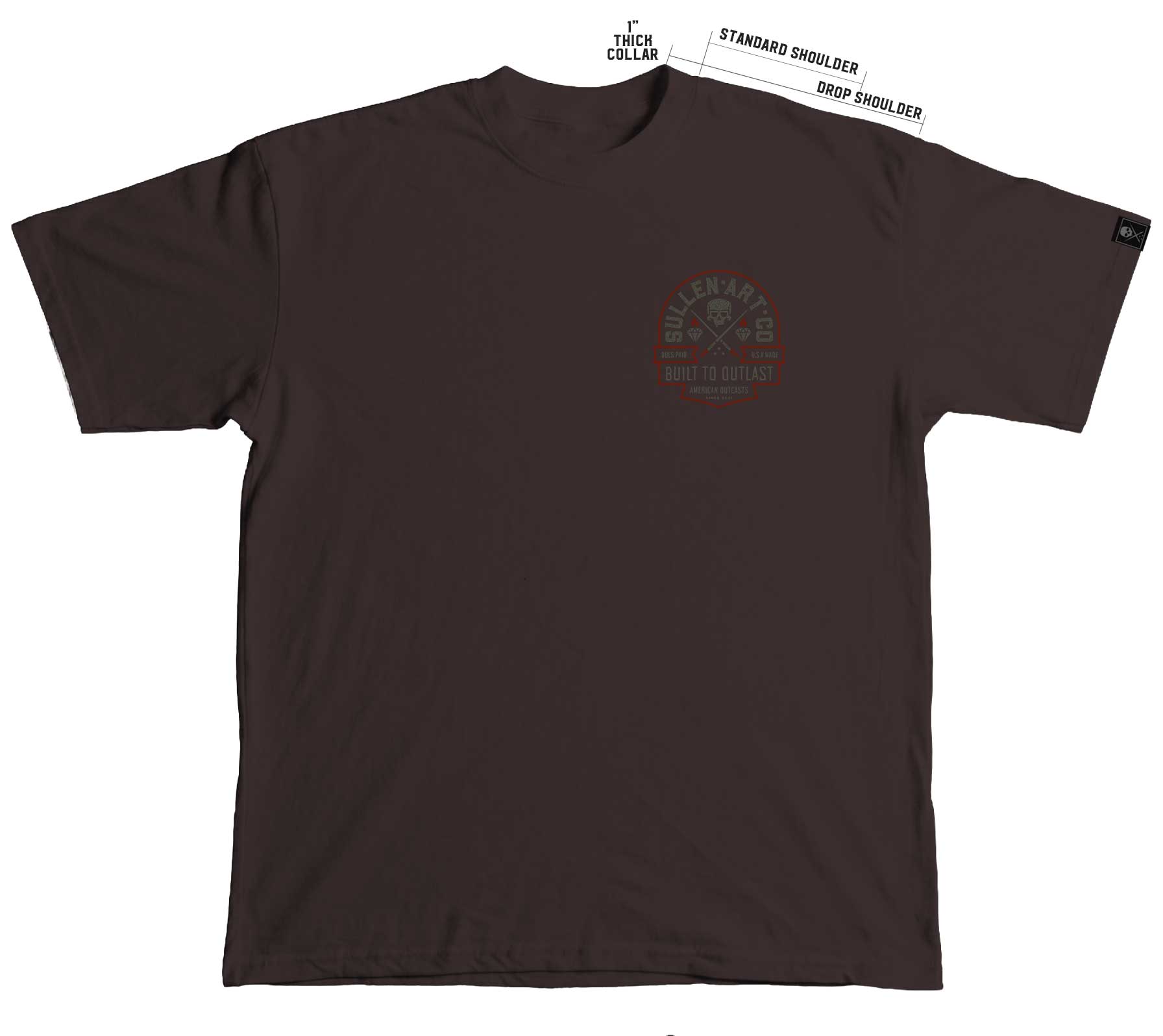
An oversized tee is cut intentionally wider and longer than a standard fit — dropped shoulders, a roomier body, extended length — so the silhouette is boxy and relaxed by design rather than by sizing up.
The distinction matters. Buying a regular tee two sizes up gets you a big collar, sleeves past your elbows, and proportions that read sloppy. A true oversized cut rebalances the whole pattern: the shoulder seam drops deliberately, the body widens without the neck gaping, the length extends without swallowing you.
Heavyweight fabric is what makes oversized work. A 4.5 oz tee cut oversized collapses into shapeless drape. A 7 oz tee cut oversized holds the silhouette — the drop shoulder sits where it was drafted to sit, the body hangs straight, the shirt has architecture. Weight gives the oversized cut its structure; the cut gives the weight room to move.
Sizing guidance: with a properly drafted oversized fit, take your normal size. The room is already built in. Size down only if you want something closer to a relaxed standard fit.

How to care for a heavyweight, garment-dyed tee
Less is more. These shirts are built to take abuse, but the way they age is partly up to you.
- Wash cold, inside out. Protects the print surface and slows dye release.
- Skip the bleach and heavy detergents. Garment-dyed color is meant to evolve, not get stripped.
- Hang dry or tumble low. The garment is pre-shrunk, but high heat is still the fastest way to stress a print.
- Never iron the graphic. If you have to iron at all, inside out, around the art.
Do this and the shirt outlasts most of your closet. The fade it picks up along the way is yours.
Heavyweight vs. standard tees: quick comparison
| Standard tee | Heavyweight tee | |
|---|---|---|
| Fabric weight | 4.3–5.3 oz | 6.5–8 oz |
| Opacity | Semi-sheer in light colors | Fully opaque |
| Structure | Drapes, follows the body | Holds its own shape |
| Print surface | Stretches, degrades prints faster | Stable, preserves fine detail |
| Lifespan | 1–2 years of regular wear | 5+ years, ages with character |
| Fit pairing | Standard / slim | Built for oversized and boxy cuts |
Check out our heavyweight tees here
FAQ
What GSM is considered heavyweight for a t-shirt?
220 GSM (about 6.5 oz) and above. Anything past 250 GSM is firmly in heavy territory, and 280+ GSM is the maximalist end of the spectrum.
Do heavyweight tees shrink?
Garment-dyed heavyweights are pre-shrunk by the dye process itself — what you buy is what you keep. Non-garment-dyed heavyweights can shrink 5–10% on first wash, so check whether the blank is pre-shrunk before sizing.
Are heavyweight tees too hot for summer?
Heavier, yes. Too hot, no — 100% cotton breathes regardless of weight, and the boxy oversized cut moves air better than a fitted midweight clinging to your back. SoCal-tested.
Why do garment-dyed tees vary slightly in color?
Each dye lot absorbs differently. That variance is inherent to the process and part of what makes the piece yours.
What's the best tee fabric for screen-printed art?
Tight-knit, ring-spun, heavyweight cotton. The denser and more stable the surface, the better it holds fine linework and color detail over years of wear.