What Is Black-and-Grey Realism? The History, the Technique, and the Artists Who Built It
What Is Black-and-Grey Realism?
Black-and-grey realism is a tattooing technique that uses only black ink — diluted into varying shades of grey with distilled water or a carrier solution — to render portraits, figures, and objects with photographic depth and dimension. No color. No line-work borders. Just value, form, and light built entirely from a single pigment.
The effect, when executed by someone who genuinely understands it, is striking. A face can look like it was printed from a photograph. A skull develops actual shadow and mass. Feathers hold individual strand definition. It requires the same foundational skills as classical drawing — understanding of light sources, value mapping, form and anatomy — applied to a moving, breathing canvas that will change over time.
That last part is what separates masters from technicians. The best black-and-grey artists don't just paint for today. They account for how skin ages, how ink spreads, how contrast flattens over decades. They build in that extra contrast knowing time will soften it. They're drawing for the version of the piece that will exist in twenty years.
Where It Came From
Black-and-grey tattooing was born inside California prisons in the 1970s and 1980s. Incarcerated artists worked with what was available: a single contraband ink color, makeshift machines built from motors and guitar strings, and time. Lots of time.
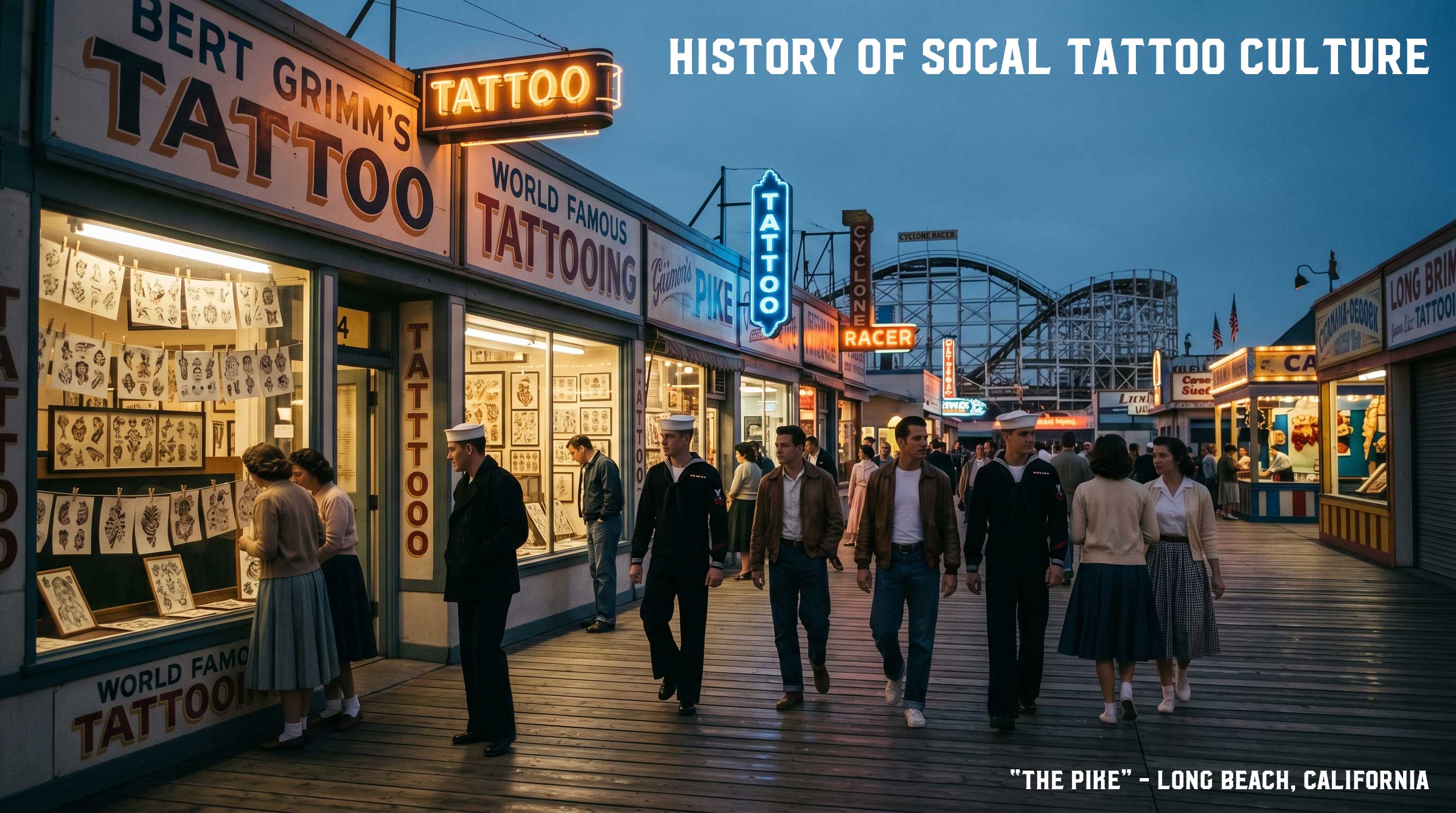
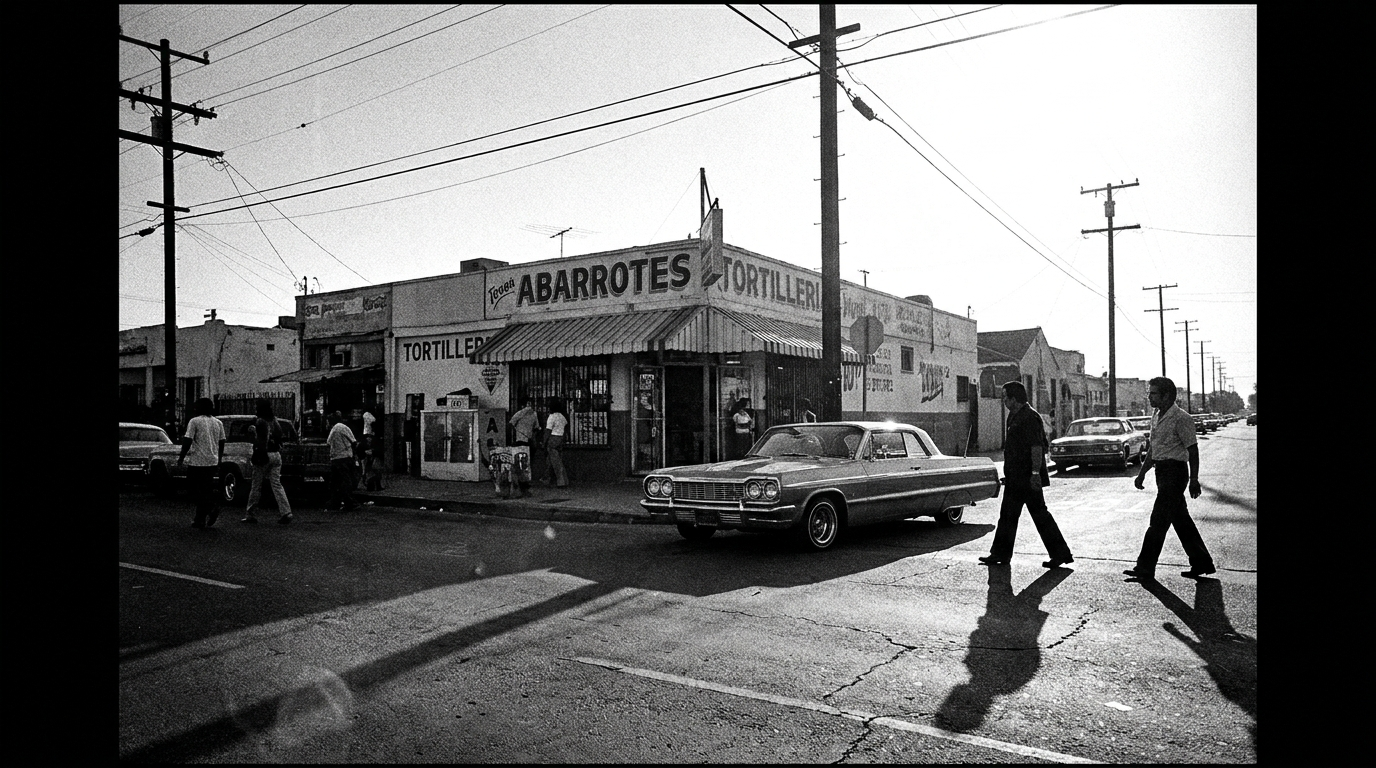
The style spread from prison yards to East Los Angeles barrio culture, where Chicano tattoo artists refined and elevated it into something that could stand alongside any fine art tradition. The ground zero of that evolution was a single shop: Good Time Charlie's Tattooland, opened on Whittier Boulevard in East L.A. in 1975 by Charlie Cartwright, with Jack Rudy as his partner. They were the first professional shop to commit fully to single-needle black-and-grey work — custom pieces, fine lines, photographic depth — built to serve a community that had been carrying this art form on their skin for decades before any shop recognized it.
The style demanded everything from the artists who worked it. Rudy didn't just tattoo — he built the tool. He and Cartwright engineered their own single-needle machine in the shop because nothing on the market could do what the work required. The technique and the technology evolved together, in the same room, driven by the same demand for precision.
Freddy Negrete came up through the same streets and the same culture, eventually working alongside Rudy and pushing the style into new territory. His memoir Smile Now, Cry Later documents that journey — from the juvenile detention facilities where he first encountered black-and-grey tattooing on the skin of older inmates, to becoming one of its defining voices. The Natural History Museum has exhibited his work. Hollywood hired him as a consultant on more than thirty films. None of that changes where it started: a kid in a cell, watching another kid's tattoos and understanding immediately that this meant something.
That origin story matters. Black-and-grey realism wasn't invented in a studio by someone with art school training and good equipment. It came from scarcity, from cultural necessity, from people marking themselves with what they had. That's why it carries weight that other styles don't.
How It Works Technically
The core mechanic is packing varying densities of diluted ink into the skin to create a tonal range — from solid black through mid-greys to the lightest possible value before bare skin. Everything lives in that range. The illusion of form, depth, and light is built entirely from how those values relate to each other.
The wash. Diluted ink — "grey wash" — is pre-mixed in multiple shades before the needle ever touches skin. Some artists work with four or five distinct grey values. Others dilute on the fly and adjust concentration instinctively. What matters is control over where each value lands, and the discipline to stay within the range you've planned.
The needle configuration. Magnum needles — curved or straight — are the standard for shading large areas smoothly. Round shaders for tighter detail work. The configuration determines whether a gradient reads as seamless or choppy, whether a transition feels painted or mechanical.
The hand. This is the variable that can't be learned from a video. Speed, pressure, angle — these are calibrated through years of repetition until they become instinct. A slow, heavy pass in the wrong spot creates blown-out grey that heals muddy. Too light and the work heals patchy. Reading the skin in real time, adjusting to how it's responding, is the actual skill — and it only comes from doing it thousands of times.
The contrast map. Before any ink goes in, the artist needs to know exactly where the lights, mids, and darks sit — and how that map will survive time. Skin heals lighter than it looks fresh. What reads correctly under a shop light will look different at six weeks, and different again at ten years. The best artists build their contrast map for the healed version, not the fresh one. They're accounting for a future they won't be present for.
The Subject Matter
Black-and-grey realism found its natural subjects in the same culture that created it. Religious iconography — the Virgin of Guadalupe, Sacred Hearts, praying hands, La Santa Muerte — rendered with devotional precision. Portraits of the people who mattered: mothers, grandmothers, lost friends, fallen brothers. Roses. Eagles. The imagery of Chicano culture and Catholic faith, executed with a reverence that matched what it meant to the people wearing it.
That vocabulary expanded over time. As the style moved out of East L.A. and into shops across the country and eventually the world, the subject matter broadened — wildlife, architecture, landscapes, pop culture — but the emotional register stayed consistent. Black-and-grey realism is inherently serious. The absence of color pulls it toward the elegiac, the devotional, the memorial. It reads like something that matters.
Portrait work remains the proving ground. A face is the hardest thing to render in any medium because human beings are neurologically wired to read faces — to notice when something is even slightly wrong. Get the proportions off by a millimeter and the brain registers it immediately, even if the viewer can't articulate why. A black-and-grey portrait that fully convinces is one of the most difficult technical achievements in tattooing. The artists who do it consistently, at a high level, are operating at a different level than most.
Why It Endures
Some tattoo styles cycle in and out of fashion. Black-and-grey realism doesn't. Fifty years from its origins and it's more prominent now than it's ever been.
The cultural rootedness is part of it. This style carries the weight of the communities that created it — specific neighborhoods, specific circumstances, specific people building a tradition without knowing that's what they were doing. When a piece is done right, that history is present in it. It's not decorative. It's documentary.
The universality of its subjects is part of it too. Portraiture, devotional imagery, mortality, love — these aren't niche interests. They're the things people have always wanted to make permanent. Black-and-grey gave the tattoo world a language for that kind of seriousness, and serious subjects never go out of style.
And part of it is simply what the finished work looks like. There is nothing quite like a healed black-and-grey piece on the right skin. Depth that reads as impossible. A photograph printed in flesh and made permanent. The style asks everything of the person executing it and, when it's right, it shows.
The Sullen Connection
Sullen Art Collective was founded in 2001 in Southern California — the same geography where black-and-grey realism was born. That's not coincidence, and it's not a brand positioning decision. It's proximity. It's relationship. It's the difference between being embedded in a culture and marketing toward one.
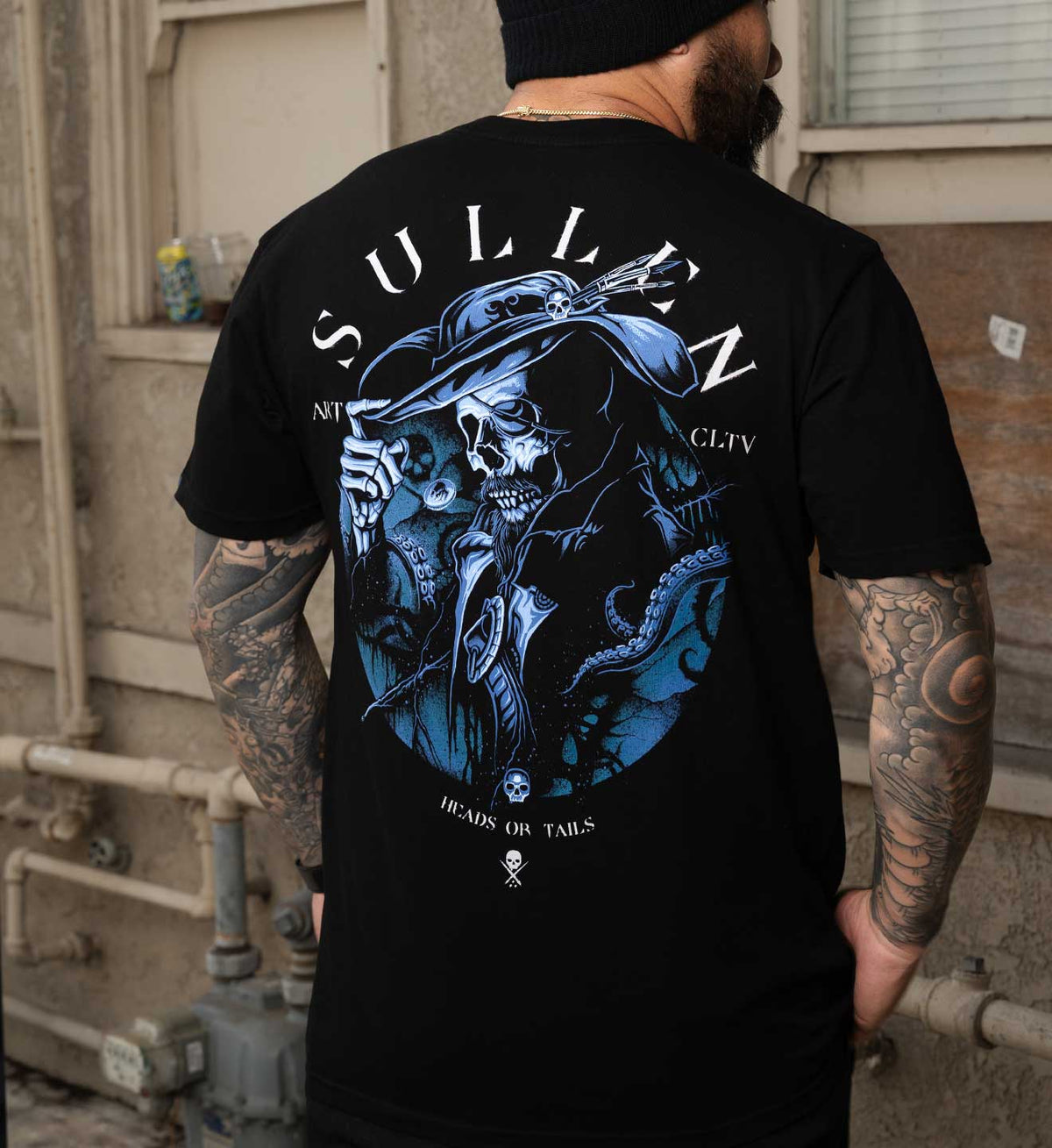
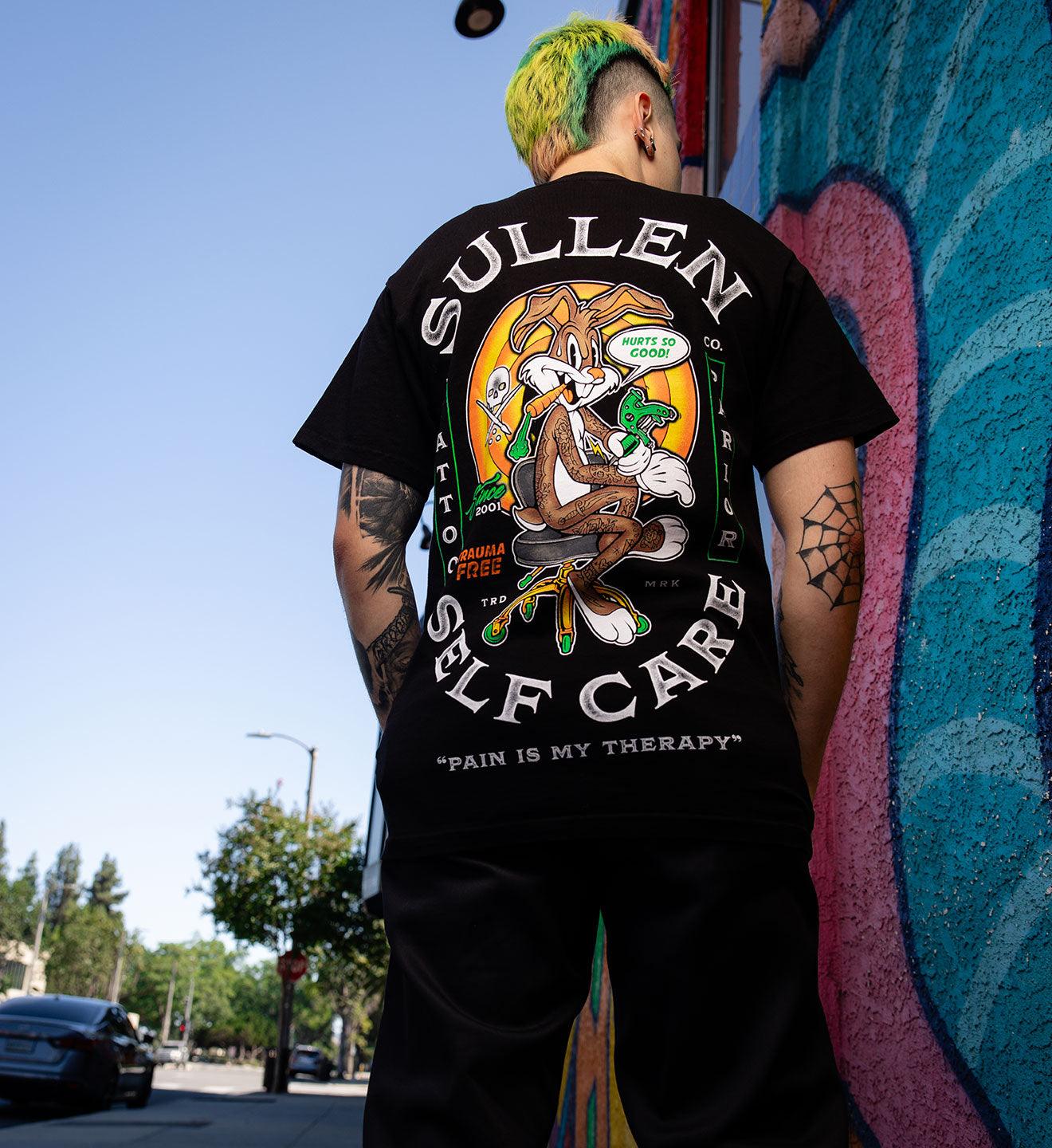
Jack Rudy — co-founder of Good Time Charlie's, one of the architects of the style — was one of Sullen co-founder Ryan Smith's closest friends. Freddy Negrete, another foundational figure in the history of black-and-grey, is part of that same circle. Good Time Charlie Cartwright himself. All three have created original artwork for Sullen tees — their designs moving through the world on garments the same way their tattooing moves through it on skin, with direct lineage to where this all started.
Twenty-five years of showing up. Five hundred affiliated artists. A community built on actual relationships with the people who defined the art form. That's what tattoo culture apparel looks like when it's done without shortcuts.
Sullen Art Collective has represented tattoo culture through apparel and community since 2001.

De Ryan Smith