


Heavyweight Tee Buyers Guide
A heavyweight tee feels different the moment you pick it up — but "heavyweight" is a loose word, and the spec that actually matters is rarely on the label. This guide explains what tee weight means, how cotton type and dyeing change the garment, and how to read a t-shirt's build before you buy.
Tee weight is measured in ounces per square yard (oz/yd²). Lightweight tees run about 4–5 oz, midweight 5–6 oz, and heavyweight roughly 7 oz and up. Heavier cotton holds its shape, lasts longer, and prints with deeper color — but weight alone doesn't equal quality. Cotton type (ring-spun vs. open-end), construction (side-seam vs. tubular), and finishing (garment dyeing, enzyme washing) matter just as much.
What does "oz weight" mean on a t-shirt?
A t-shirt's weight refers to the density of its fabric, measured in ounces per square yard (oz/yd²) — not the weight of the whole shirt. It describes how much the cotton itself weighs across a fixed area, which is why it's a reliable way to compare fabric across brands regardless of shirt size.
Higher oz/yd² means a denser knit. That density is what you feel as substance in the hand, and it's what lets a shirt hang with structure instead of clinging.
| Weight | oz/yd² | Feel & use |
|---|---|---|
| Lightweight | ~4–5 oz | Soft, breathable, drapey. Good for layering and hot weather. |
| Midweight | ~5–6 oz | The everyday standard. Balanced structure and comfort. |
| Heavyweight | ~7 oz and up | Dense, structured, durable. Holds shape; premium hand. |
Does heavier always mean better?
No. Weight is one input, not a quality score. A heavy shirt made from coarse yarn on a cheap blank can feel stiff and board-like, while a well-made midweight can feel better than a poorly made heavyweight. Weight tells you about density and durability — not about softness, fit, or how it's finished. The other three factors below are what separate a good heavyweight from a stiff one.
Cotton type: ring-spun vs. open-end
How the cotton yarn is spun affects softness and print quality more than most shoppers realize.
- Open-end (carded) cotton is spun faster and more cheaply, producing a slightly coarser, more textured yarn. It's durable and budget-friendly — the standard for basic everyday tees.
- Ring-spun cotton twists and thins the fibers into a finer, smoother, stronger yarn. The result is a softer hand and a tighter surface that holds print detail better. Combed ring-spun goes a step further, removing short fibers for an even smoother finish.
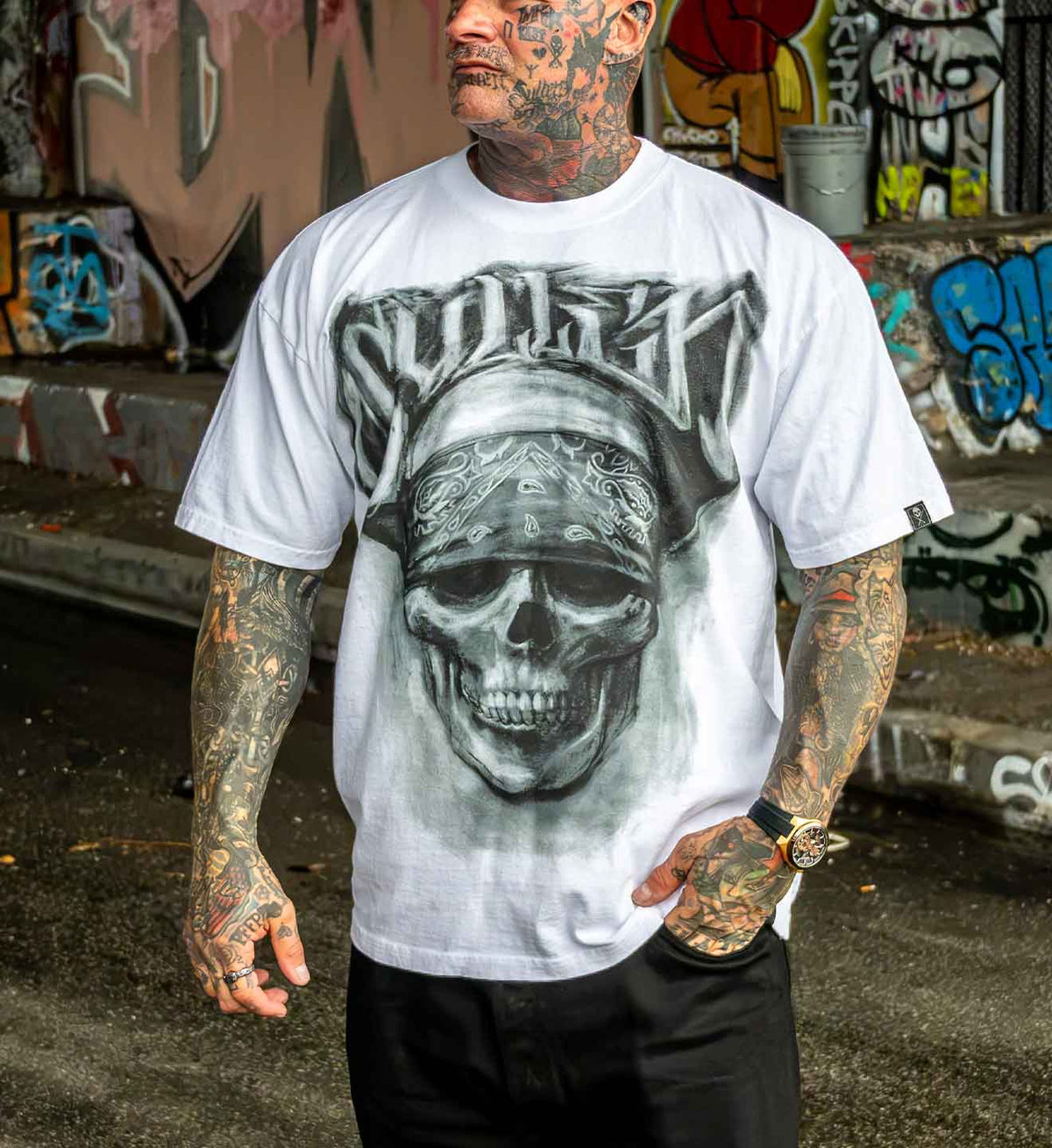
For graphic tees especially, ring-spun is the better canvas: the smoother surface lets ink sit cleanly, so fine lines and gradients read sharper.
What is garment dyeing — and why does it matter?
Most t-shirts are made from fabric that was dyed before the shirt was sewn (piece-dyed or yarn-dyed). Garment dyeing flips the order: the shirt is sewn first from undyed "prepared-for-dye" (PFD) cotton, then dyed as a finished garment.
This matters for two reasons. First, garment dyeing produces richer, more dimensional color with a lived-in depth that's hard to get otherwise. Second — and this is the part most relevant to art-driven apparel — it lets a brand dye each garment to a specific color chosen to complement the artwork printed on it, rather than dropping a print onto a generic stock color. The whole piece reads as one.
Construction and finishing: the last 20%
Side-seam vs. tubular
Tubular construction knits the body as a single tube with no side seams — common, economical, and prone to a boxier, less tailored shape. Side-seam construction sews the body from two panels with seams down each side, giving a cleaner, more structured fit that holds its silhouette. Most elevated and fashion-cut heavyweights are side-seam.
Enzyme and silicone washing
A raw heavyweight tee can feel stiff straight off the line. Finishing washes fix that. An enzyme wash uses enzymes to gently break down surface fibers for a softer, broken-in hand and a cleaner surface. A silicone wash adds a smooth, supple finish. A garment that's been washed this way can carry serious weight and still feel soft on day one — which is the whole trick behind a heavyweight that doesn't feel like cardboard.
How to read a tee before you buy: a checklist
- Weight — look for oz/yd². 7 oz+ is a true heavyweight.
- Cotton — ring-spun or combed ring-spun beats open-end for softness and print.
- Dye — garment-dyed / PFD signals richer color and (for graphic tees) color chosen to fit the art.
- Construction — side-seam for a structured fit; note drop-shoulder or box cut if you want an oversized silhouette.
- Finishing — enzyme or silicone washed means a heavy tee that's still soft.
A worked example: how Sullen builds its tees
To see how these specs combine in practice, here's how Sullen structures its tee line across three blanks:
- Standard — a combed-cotton everyday blank with a classic build. Light, soft, durable, clean to print on.
- Premium — combed ring-spun PFD cotton, garment-dyed to complement the artwork on each design.
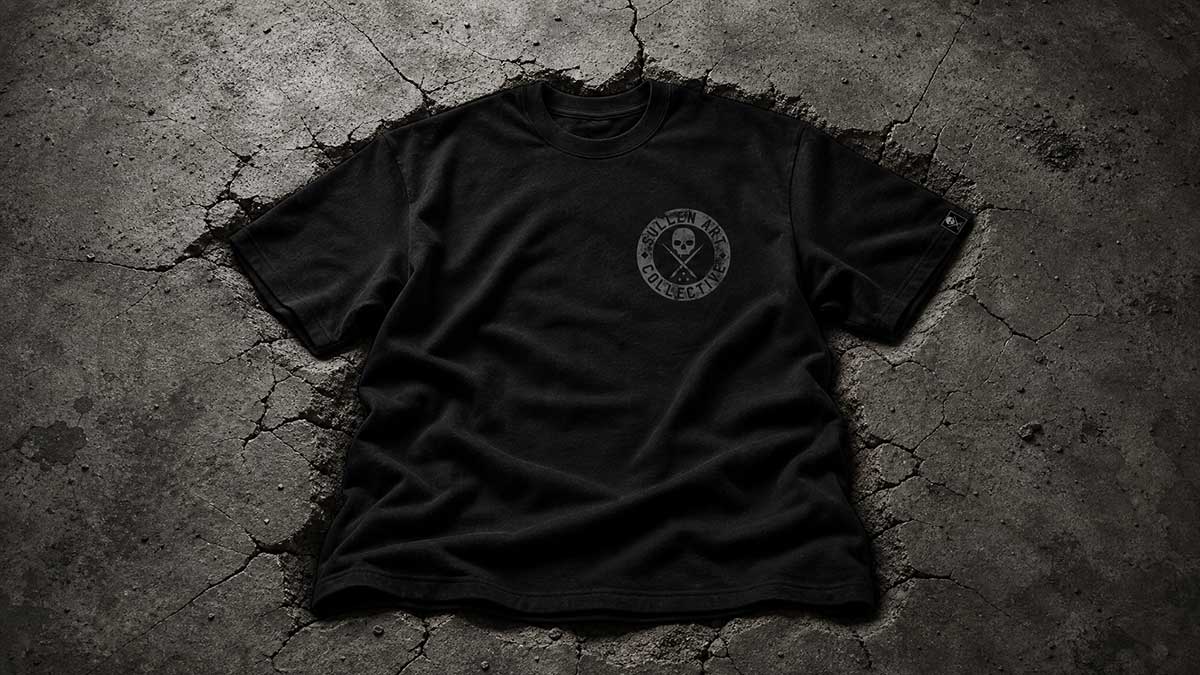
- 1Ton — a 7.6 oz, 100% cotton heavyweight with side-seam construction, box cut, and drop shoulder, finished with a silicone bath and enzyme wash so the weight stays soft, and garment-dyed per design like the Premium.
It's a clean illustration of the principle in this guide: weight is the headline, but cotton, dye, construction, and finishing are what make a heavyweight worth wearing.
Frequently asked questions
- What is a good weight for a heavyweight t-shirt?
- A true heavyweight t-shirt is roughly 7 oz per square yard or more. Anything from about 7 to 9 oz is considered heavyweight, with the higher end feeling notably dense and structured.
- What does oz mean on a t-shirt?
- Oz refers to ounces per square yard (oz/yd²), a measure of how dense the fabric is. It compares the weight of the cotton across a fixed area, not the weight of the entire shirt.
- Is ring-spun cotton better than regular cotton?
- Ring-spun cotton is spun into a finer, smoother, stronger yarn than standard open-end (carded) cotton, giving a softer feel and a better surface for printing. It generally feels and prints better, though it costs more.
- What is garment dyeing?
- Garment dyeing is dyeing a t-shirt after it has been sewn, using undyed prepared-for-dye (PFD) cotton. It produces richer, more dimensional color and lets a brand match the dye color to the artwork on the shirt.
- Why do some heavyweight tees feel soft and others feel stiff?
- Finishing is the difference. Heavyweight tees that have been enzyme washed or silicone washed feel soft and broken-in despite their weight, while unwashed heavyweight cotton can feel stiff at first.
This guide is general education on t-shirt fabric and construction. Specific weights and finishes vary by brand and product — check the individual product details when buying.

De Ryan Smith