Artículo: Chicano Tattooing: The Art Form That Never Asked for Permission
Chicano Tattooing: The Art Form That Never Asked for Permission
The culture, the artists, and why Southern California is where it all lives
We Grew Up Here
There's a version of Chicano tattoo culture you can read about in books and watch in documentaries. And then there's the version you grow up around — on the walls, on the skin, in the cars, in the streets. Those are two different educations.
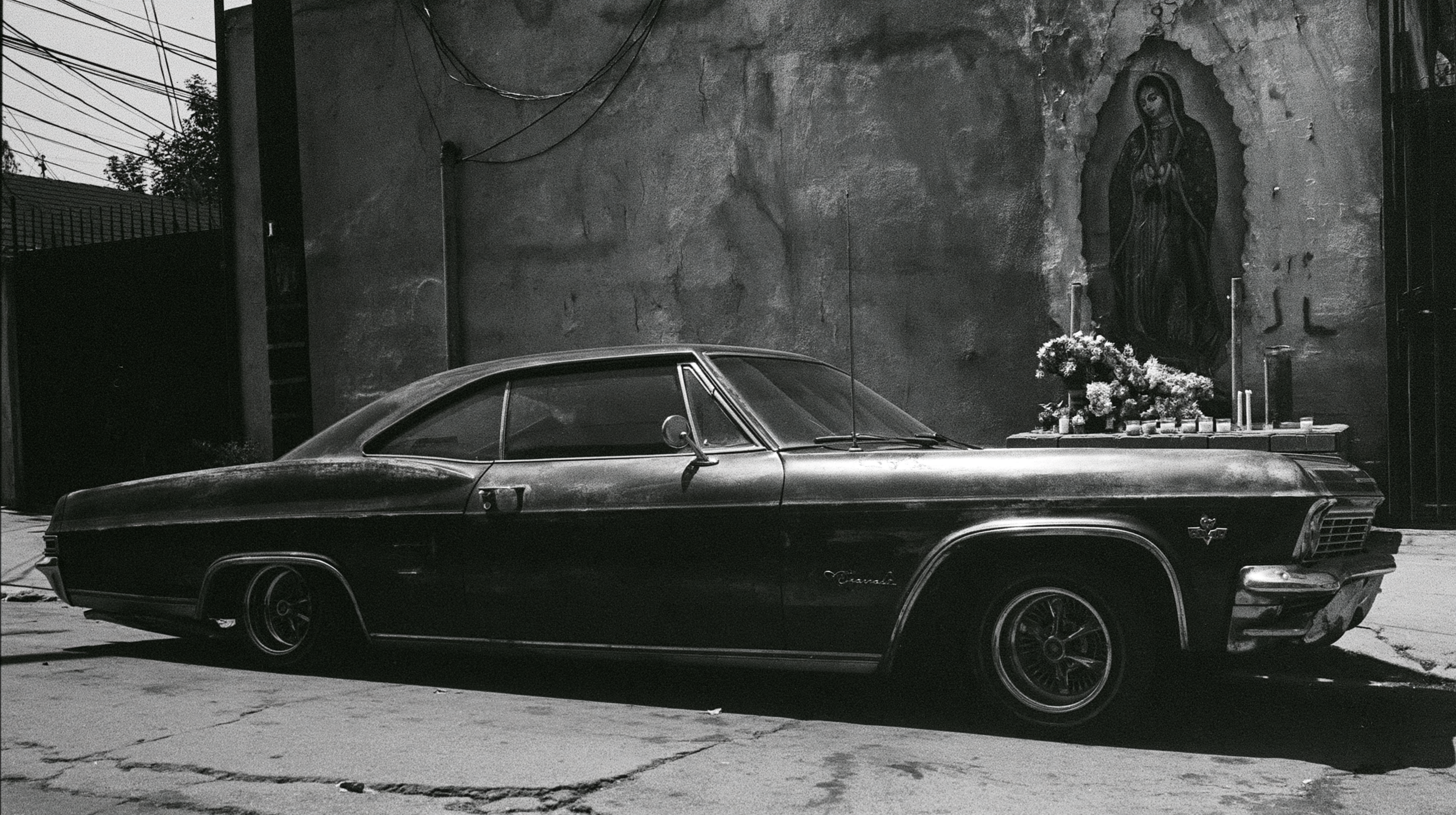
Our co-founder Ryan Smith grew up in Garden Grove, California. Not adjacent to Chicano culture. Inside it. The visual language of East LA and the surrounding SoCal communities — the religious iconography, the fine line portraiture, the lowriders, the murals — was the environment, not a subject of study. It shaped how he saw before he had language for what he was seeing.
When he got to Art Center College of Design as an illustration major, the realism he'd absorbed from that environment found a framework. Technical training met cultural rootedness. That combination is what Sullen's aesthetic has always been built on — not a brand that discovered tattoo culture from the outside and built a business around it, but one that grew directly out of it.
That distinction matters to us. It's the whole thing, actually.
The Moment It Clicked
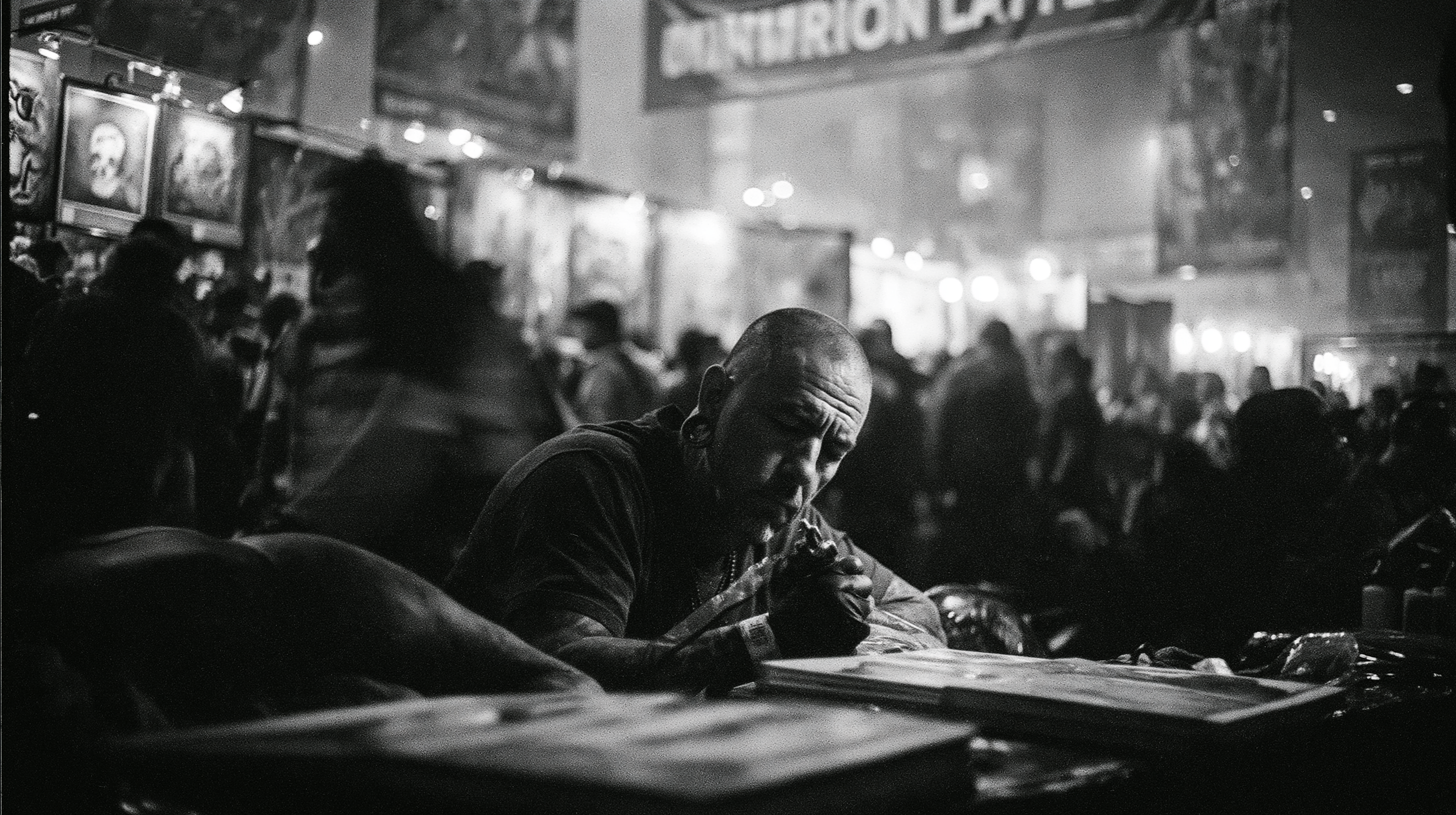
In 1996, Ryan attended the Ink Slingers Ball and watched Jack Rudy work firsthand for the first time.
He already knew the culture. He'd been tattooing since he was nineteen. But seeing Rudy's black-and-grey realism up close — the depth, the control, the way a single diluted pigment could render a face with photographic precision — was something different. It was the technical summit of everything the culture had been building toward, executed by one of the people who built it.
That moment is a thread that runs through everything we've done since. The understanding that the art coming out of this culture deserved to be taken seriously — documented, elevated, put on garments worthy of it — didn't come from a market research report. It came from standing in a convention hall in 1996 watching a master work and knowing immediately that this was what we wanted to build around.
Where It Comes From
Chicano tattooing developed in the prisons and barrios of California from the 1940s onward, rooted in the same communities that produced lowrider culture, pachuco style, and some of the most distinctive visual art in American history.
The style drew from multiple traditions simultaneously — Catholic devotional imagery brought from Mexico, American tattoo flash filtered through a Chicano lens, fine art portraiture adapted to skin with improvised tools. What emerged was something entirely its own: fine line black-and-grey work of extraordinary delicacy, rendered with handmade machines and contraband ink, carrying the weight of family, faith, neighborhood, and identity.
The imagery was never arbitrary. The Virgin of Guadalupe wasn't a design choice — it was devotion made permanent. A portrait of a mother or grandmother wasn't decoration — it was a memorial, a tribute, a declaration of what mattered. Chicano tattooing understood from the beginning that permanent marks on a body are serious things, and treated them accordingly.
When Good Time Charlie opened his shop on Whittier Boulevard in East LA in 1975 with Jack Rudy — one of Ryan's closest friends — they weren't inventing the style. They were professionalizing something the community had been doing for decades, giving it a legitimate platform, refining its tools and techniques, and sending it out into the wider world. Freddy Negrete followed the same path — from the juvenile facilities where he first encountered the style to Shamrock Social Club on the Sunset Strip to the Natural History Museum and thirty-plus Hollywood films. Both have designed tees for Sullen. Both relationships go back years. That's not coincidence — it's community.
The Artists We Work With
Our relationship with Chicano tattooing isn't historical. It's active, ongoing, and personal.
Steve Soto is one of the most technically accomplished black-and-grey artists working today — fine line portraiture at a level that makes the difficulty invisible. We've worked together for years across multiple designs. The relationship is built on mutual respect between people who understand where the tradition comes from and what it requires.
Franco Vescovi brings a precision to the style that reflects deep technical mastery — the kind that only comes from years of serious work. His Sullen designs carry the same standard he brings to everything he does.
Jose Lopez — whose Lowrider Tattoo is itself a cultural institution — represents the direct lineage from the East LA tradition to the present day. The lowrider connection isn't incidental to what we do at Sullen. The visual world of lowrider culture and Chicano tattooing developed together, informed each other, shared artists and audiences and iconography for decades. Having Jose in the program means having that lineage represented directly.
Big Sleeps brings the contemporary voice — work that's rooted in the tradition while speaking directly to the present moment. His Stronger donation tee is on the site right now. It's not just a product. It's a statement about what this culture values and what we stand for when we have the opportunity to stand for something.
These aren't licensing arrangements. They're friendships. Built over years, at conventions, in shops, through the shared experience of caring deeply about a culture that deserves more than it usually gets from the mainstream. The same foundation every meaningful relationship in our artist program is built on.
Why the Visual Language Travels
Chicano tattooing is one of the few regional styles that went fully global without losing its identity in the process.
Part of that is the universality of its subjects. Religious devotion, family portraiture, mortality, love — these aren't culturally specific emotions. They're human ones. The visual language Chicano tattooing developed to express them translates because the feelings translate.
Part of it is the technical achievement. Fine line black-and-grey realism is difficult enough that mastery is unmistakable. When someone sees it done at the highest level they recognize the skill regardless of cultural context. The style earned its global spread.
And part of it is the authenticity of its origin. Chicano tattooing didn't emerge from a studio or a school or a trend cycle. It came from communities marking themselves with what mattered, using what they had, building a visual tradition out of necessity and devotion. That origin story is legible in the work. It carries weight because it came from weight.
We've understood that from the beginning. It's why we've never tried to sanitize it, genericize it, or make it more palatable to an audience that didn't grow up with it. The culture is the point. Diluting it defeats the purpose.
SoCal Is Still the Center
Trends move. Cultural centers shift. But Southern California is still where Chicano tattooing lives most fully — in the shops, in the conventions, in the communities that have been carrying it for generations.
Garden Grove to East LA to Anaheim to the Sunset Strip. The geography of this culture is the geography of our history. The artists who built the style and the artists carrying it forward are the artists in our program. We didn't go find this culture. We came from it.
Twenty-five years in, that's still the whole point.

De Ryan Smith